

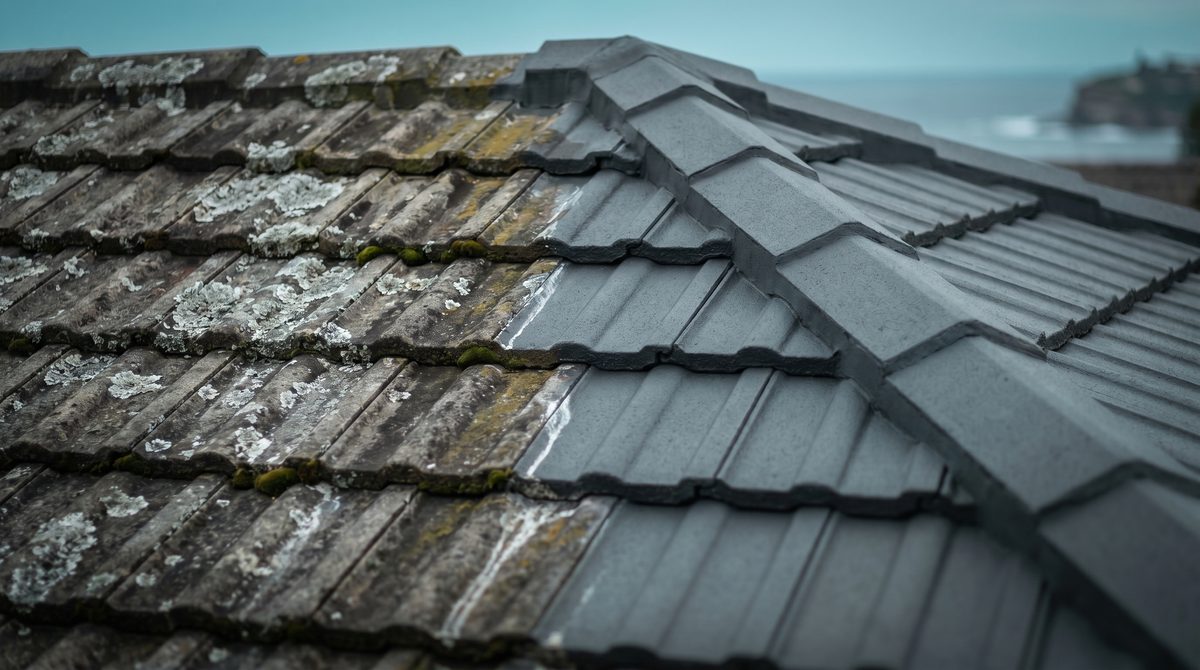
Yes, pressure washing can damage roof tiles. High-pressure water strips protective coatings, cracks aged tiles, forces water under overlapping tiles, and can void manufacturer warranties. Despite this, pressure washing remains one of the most commonly requested roof cleaning methods by homeowners who are unaware of the risks. Understanding why pressure washing is problematic for roofs, and what the safer alternatives are, can save you thousands of dollars in avoidable damage.
The Short Answer: Yes, Pressure Washing Can Damage Roof Tiles
A standard domestic pressure washer operates between 1,500 and 2,500 PSI. Commercial units used by some cleaning operators can reach 3,000 to 4,000 PSI or higher. At these pressures, water becomes a cutting tool. While this force is ideal for cleaning concrete driveways and brick pavers, it is far too aggressive for roof tiles, metal roofing, and most elevated surfaces.
The damage caused by pressure washing a roof falls into several categories, and not all of it is immediately visible. Some of the most costly consequences only become apparent months or even years after the cleaning takes place.
Surface coating removal. Most concrete roof tiles are manufactured with a factory-applied oxide coating that provides colour, UV protection, and water resistance. High-pressure water strips this coating, leaving the raw concrete exposed to moisture absorption and UV degradation. Once the coating is gone, the tile becomes porous, absorbs water, and deteriorates at an accelerated rate. The tile may look cleaner immediately after pressure washing, but its protective layer has been compromised.
Tile cracking and breakage. Concrete and terracotta tiles become more brittle with age. A tile that has been on a roof for 20 or 30 years has been through thousands of thermal expansion and contraction cycles, and its structural integrity is reduced. When high-pressure water hits these aged tiles, the force can crack them along existing stress lines. These cracks may be hairline fractures that are invisible from ground level but allow water to penetrate into the roof cavity during rain.
Water forced under tiles. Roof tiles are designed to overlap, creating a water-shedding system that directs rainwater downward and off the roof. When a pressure washer directs water upward or across the tile surface at high velocity, water is forced under the overlapping edges and into the roof cavity. This can saturate the sarking membrane, wet the timber battens, and create conditions for timber rot and mould growth that the homeowner may not discover for months.
Ridge cap and flashing damage. The bedding and pointing that secures ridge caps to the roof is a cement-based mortar that becomes more fragile with age. High-pressure water can dislodge or crack this mortar, leaving gaps that allow water and wind-driven rain to enter the roof cavity. Similarly, the sealant around flashings at roof penetrations, such as vent pipes, skylights, and chimneys, can be damaged by high-pressure water.
Warranty implications. Many roofing material manufacturers explicitly state that high-pressure cleaning voids their product warranty. BlueScope, the manufacturer of Colorbond steel, recommends only low-pressure cleaning methods. If you pressure wash a Colorbond roof and later experience paint failure or corrosion, your warranty claim is likely to be rejected.
How Pressure Washing Damages Different Roof Types
Terracotta Tiles
Terracotta tiles are made from fired clay and are available in both glazed and unglazed finishes. Unglazed terracotta is porous and relies on its surface finish for water resistance. High-pressure water erodes this surface, opens up the pore structure, and makes the tile more absorbent. Glazed terracotta is more resistant, but the glaze can still be chipped or cracked by high-pressure water hitting at close range, particularly at tile edges and on older tiles where the glaze may have already begun to craze.
Terracotta tiles are also generally thinner and more brittle than concrete tiles, making them more susceptible to cracking under pressure. Replacement terracotta tiles can be difficult to source for older profiles, meaning a cracked tile may require replacing an entire section of roof to achieve a colour and profile match.
Concrete Tiles
Concrete tiles are the most common roofing material in NSW. They are more robust than terracotta but are still vulnerable to pressure washing damage, particularly as they age. The factory-applied oxide coating that gives concrete tiles their colour and water resistance wears thinner over time. On a roof that is 15 to 20 years old, this coating may already be partially degraded. Pressure washing removes what remains of it, exposing the raw concrete to moisture and UV.
Once the coating is stripped, concrete tiles absorb water like a sponge. This moisture retention accelerates biological growth, meaning the roof re-soils faster after a pressure wash than it would after a softwash clean. Property owners often find themselves in a cycle of pressure washing every 12 months because growth returns so quickly, not realising that the pressure washing itself is making the problem worse with each clean.
Colorbond and Metal Roofing
Colorbond steel and other metal roofing products should never be pressure washed. The baked-on paint system that protects the steel substrate is designed to withstand weather, not high-pressure water jets. Pressure washing can strip the paint finish, scratch the surface, and compromise the corrosion protection that the coating provides.
BlueScope specifically states in their care and maintenance guidelines that Colorbond should be cleaned using low-pressure water and mild, non-abrasive cleaning solutions. Any damage caused by high-pressure cleaning is considered misuse and is not covered under warranty. Given that Colorbond warranties can extend up to 36 years for the steel and up to 25 years for the paint system, voiding this coverage through incorrect cleaning is a significant and avoidable financial risk.
Slate Roofing
Slate is a natural stone product that splits along its grain structure. High-pressure water can lift and delaminate the surface layers of slate tiles, causing them to flake, crack, and lose material. Slate roofing is typically found on older and heritage properties, and replacement tiles can be extremely expensive and difficult to source. Pressure washing a slate roof is one of the most damaging things you can do to it.
The Safer Alternative: Softwash Roof Cleaning
Softwash roof cleaning is the method recommended by roofing material manufacturers, industry bodies, and experienced roof cleaning professionals. It delivers superior results to pressure washing while eliminating the risk of physical damage to the roof surface.
How softwash works. Softwash uses a low-pressure delivery system, typically operating at under 500 PSI, to apply a biodegradable cleaning solution to the roof surface. This solution, usually a carefully calibrated blend of sodium hypochlorite, surfactants, and water, kills mould, algae, lichen, and moss at the root level. After adequate dwell time, the roof is rinsed with low-pressure water or, in some cases, left for natural rainfall to complete the rinse process.
Better results. Because softwash kills biological growth at the root rather than just blasting it off the surface, the results last significantly longer. Pressure washing removes visible growth but leaves the root structure intact, meaning regrowth can begin within weeks. Softwash results typically last 12 to 24 months, and the residual chemical action continues to inhibit regrowth for months after treatment. For property owners, this means fewer cleans, lower long-term costs, and a roof that stays cleaner for longer.
Longer roof lifespan. By avoiding the physical damage that pressure washing causes, softwash helps preserve the protective coatings and structural integrity of roof tiles. A well-maintained roof that is softwashed on a regular schedule will last significantly longer than one that is repeatedly pressure washed. Over the life of a roof, this difference can amount to tens of thousands of dollars in avoided replacement costs.
What to Look for When Hiring a Roof Cleaner
If you are considering having your roof cleaned, asking the right questions before hiring can protect you from damage, liability, and poor results. Here are the key things to establish.
What method will they use? Ask specifically whether they use softwash or high-pressure cleaning. If the answer is high-pressure, ask why. There are very few situations where high-pressure water is appropriate on a roof, and an experienced operator should be able to explain their method selection clearly. If they cannot, or if they dismiss the question, consider it a warning sign.
Do they carry public liability insurance? Any operator working on your property should carry a minimum of $10 million in public liability insurance. This protects you if they cause damage to your property or if someone is injured during the work. Ask to see their certificate of currency, not just a claim that they are insured.
Are they height safety compliant? Roof work is classified as working at height under SafeWork NSW regulations. This requires appropriate fall prevention systems, risk assessments, and training. Operators should hold current height safety certifications and be able to demonstrate compliance with workplace health and safety requirements. An operator who works on your roof without proper height safety measures creates a liability risk for you as the property owner.
Will they assess the roof before cleaning? A professional operator will always inspect the roof condition before cleaning begins. This assessment identifies existing damage such as cracked tiles, deteriorated pointing, or compromised flashings that could be worsened by cleaning or that may indicate underlying issues. An operator who arrives and immediately starts cleaning without an assessment is not following best practice.
Do they offer any guarantee? Reputable operators stand behind their work. While no one can guarantee that biological growth will never return, a professional should be confident enough in their method to offer a reasonable guarantee on their results. Ask what happens if the growth returns within a specified period and whether they will return to retreat the area.
Frequently Asked Questions
Can pressure washing damage roof tiles?
Yes. Pressure washing can crack aged concrete and terracotta tiles, strip factory-applied oxide coatings, force water under overlapping tiles causing leaks, and dislodge ridge cap bedding and pointing. The damage is often not immediately visible but leads to accelerated deterioration, moisture penetration, and costly repairs. Softwash cleaning achieves better results without these risks.
What PSI is safe for roof cleaning?
Most professional softwash systems operate at under 500 PSI, with many applications using between 60 and 100 PSI. This is comparable to a standard garden hose and is safe for all common roof types. By contrast, pressure washers typically operate between 1,500 and 4,000 PSI, which is far too aggressive for roof tiles, Colorbond, and most painted surfaces.
Is soft washing better than pressure washing for roofs?
Yes. Softwash uses low-pressure application of biodegradable cleaning solutions that kill mould, algae, and lichen at the root level. This delivers longer-lasting results than pressure washing, which only removes surface growth. Softwash also avoids the physical damage that high-pressure water causes to tiles, coatings, and flashings. Results from softwash typically last 12 to 24 months.
Do I need a licence for pressure cleaning in NSW?
There is no specific licence required for pressure cleaning in NSW. However, any work performed at height on a roof requires compliance with SafeWork NSW height safety regulations. This includes appropriate fall prevention systems, training, and risk assessment. Professional roof cleaners should hold relevant height safety certifications and carry public liability insurance.
How long does soft wash treatment last?
Softwash treatment results typically last between 12 and 24 months depending on location, climate, shade coverage, and surrounding vegetation. Coastal properties in NSW tend to see regrowth faster due to higher humidity and salt exposure. The cleaning agents continue working after application, providing residual protection that pressure washing cannot offer.
Protect Your Roof the Right Way
Your roof is one of the most expensive components of your home, and how it is cleaned matters. Pressure washing may seem like the fastest solution, but the long-term cost of tile damage, coating loss, and accelerated deterioration far outweighs the short-term result. Softwash cleaning protects your roof while delivering cleaner, longer-lasting results. If your roof needs attention, or if you want to understand the best maintenance approach for your specific roof type and location, we are here to help. Reach out through our contact page or call us on 0418 167 798.