

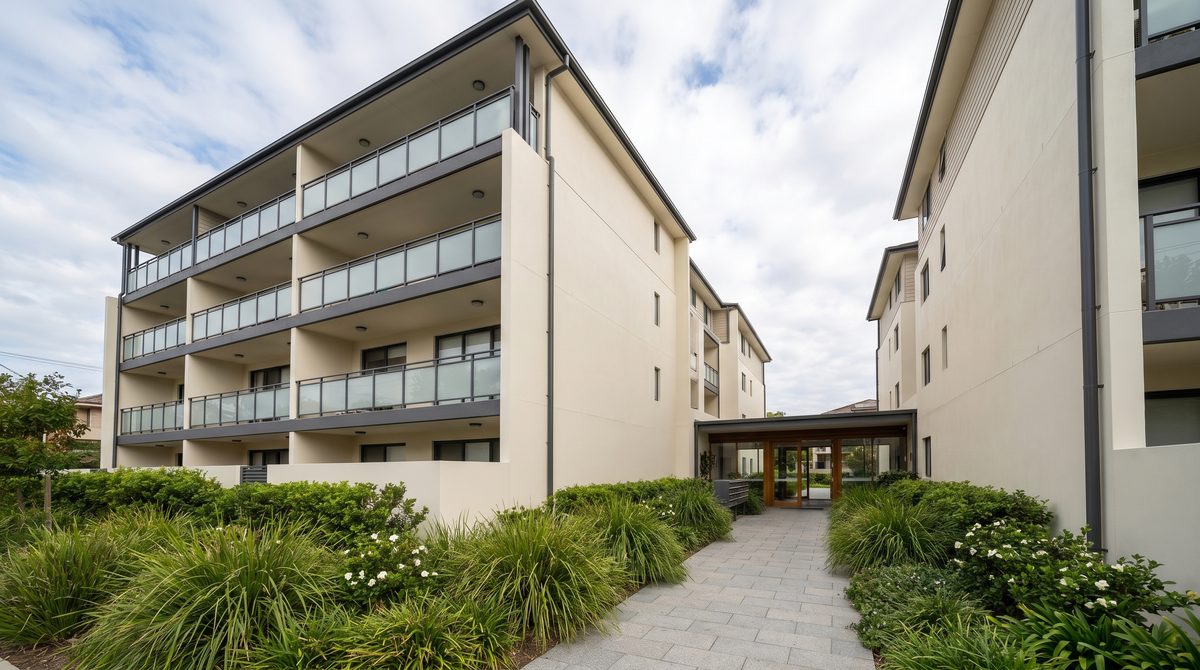
Under the Strata Schemes Management Act 2015, owners corporations in NSW have a legal obligation to maintain common property, including all exterior surfaces of the building. Failure to maintain these surfaces can result in accelerated deterioration, increased repair costs, reduced property values, and potential legal liability for the committee. Despite this, exterior maintenance is one of the most commonly overlooked areas in strata property management.
This guide provides a comprehensive framework for NSW strata committees to plan, schedule, and budget for exterior maintenance. It covers the legal obligations, defines what constitutes exterior common property, provides a detailed maintenance schedule by frequency, and outlines how to select and manage exterior cleaning contractors.
Why Exterior Maintenance Is a Legal Obligation for Strata Schemes
The Strata Schemes Management Act 2015 imposes a clear duty on owners corporations to maintain and keep in a state of good repair the common property and any personal property vested in the owners corporation. This is not a discretionary activity. It is a statutory obligation that applies to every strata scheme in NSW, regardless of size.
Section 106 of the Act requires every owners corporation to establish a capital works fund (formerly the sinking fund) to cover anticipated major repairs and maintenance. The 10-year capital works fund plan must include provision for the maintenance and renewal of exterior building elements. Committees that fail to adequately fund exterior maintenance expose the scheme to unplanned special levies when deferred maintenance eventually requires urgent attention.
There is also a liability dimension. If a person is injured due to poorly maintained common property, such as a slip on an algae-covered pathway or an injury from a falling piece of deteriorated cladding, the owners corporation may be held liable. Similarly, if water ingress caused by blocked gutters or degraded roof membranes damages a lot owner’s property, the owners corporation can be required to compensate the affected owner.
Well-maintained exterior surfaces also directly support property values. Prospective buyers and tenants form their first impression of a strata building from its exterior presentation. Buildings with stained walls, dirty windows, mould-covered roofs, and unkempt common areas consistently achieve lower sale prices and rental returns than well-maintained equivalents in the same area.
What Constitutes Exterior Common Property
Understanding what falls within the scope of exterior common property is essential for planning maintenance schedules and allocating budgets. Under the Act, common property includes all parts of the strata scheme that are not part of a lot. For exterior maintenance purposes, this typically encompasses the following elements.
Roofs and roof structures include all roofing materials, ridge capping, flashing, roof-mounted equipment (ventilation units, antennas, solar panels), and any roof access infrastructure. The roof is the building’s primary weather barrier and its maintenance is critical. Regular roof cleaning prevents the buildup of biological growth that can degrade roofing materials and block drainage.
External walls and facades include all rendered, painted, tiled, or clad wall surfaces visible from the exterior. This extends to balcony balustrades, fascia boards, eaves, soffits, and any architectural features. Coastal properties are particularly vulnerable to salt air damage that accelerates surface deterioration.
Windows in common areas include lobby glass, stairwell windows, corridor windows, and any glazing that does not form part of an individual lot. Some schemes also classify the exterior face of lot windows as common property. Check your scheme’s by-laws for clarity on this point.
Driveways, pathways, and car parks include all sealed surfaces used for vehicle and pedestrian access within the common property boundary. These surfaces accumulate oil stains, tyre marks, leaf litter, and biological growth that create both presentation issues and slip hazards.
Fences, gates, and boundary walls form the perimeter of the common property and are typically the first element visible to visitors and prospective buyers. Timber fences require regular cleaning to prevent mould and rot. Metal fences and gates need periodic washing to remove corrosion-promoting contaminants.
External lighting and signage including building identification signage, pathway lighting, security lighting, and car park lighting all require periodic cleaning to maintain functionality and appearance.
Recommended Exterior Maintenance Schedule
The following schedule provides a practical framework for NSW strata committees. Adjust frequencies based on your building’s specific location, materials, and environmental exposure. Coastal properties and buildings surrounded by dense vegetation will generally require more frequent attention. Refer to our guide on roof cleaning frequency for additional detail on scheduling roof maintenance.
| Frequency | Task | Purpose |
|---|---|---|
| Monthly | Visual inspection of gutters, drains, and downpipes | Early identification of blockages and overflow risks |
| Monthly | Clear debris from pathways and common area entries | Slip hazard prevention and presentation |
| Monthly | Check external lighting for damage and cleanliness | Safety and security compliance |
| Quarterly | Pressure clean driveways, pathways, and car parks | Remove oil, tyre marks, biological growth, and slip hazards |
| Quarterly | Clean building entrance areas and lobby exteriors | Presentation and first-impression management |
| Quarterly | Gutter and downpipe clearance | Prevent water overflow, roof damage, and pest harbourage |
| Six-monthly | External window cleaning (common areas) | Maintain natural light, presentation, and glass longevity |
| Six-monthly | Inspect and clean balcony balustrades and railings | Safety compliance and corrosion prevention |
| Six-monthly | Clean external signage and lighting fixtures | Visibility, compliance, and presentation |
| Annually | Full building exterior wash (walls and facades) | Remove accumulated grime, mould, salt, and pollutants |
| Annually | Roof cleaning and inspection | Remove biological growth, check for damage, maintain drainage |
| Annually | Fence and boundary wall cleaning | Prevent rot, corrosion, and presentation deterioration |
| Every 2-5 years | Full roof restoration clean and treatment | Extend roof lifespan and address accumulated degradation |
| Every 2-5 years | Driveway and car park re-sealing (after deep clean) | Surface protection and stain prevention |
| Every 2-5 years | Full facade clean and protective coating assessment | Long-term surface preservation and weather protection |
Monthly Tasks
Monthly tasks are primarily visual inspections and light maintenance that can often be performed by the building’s caretaker or a committee member. The focus is on early identification of issues before they escalate. Blocked gutters that overflow in a single heavy rain event can cause thousands of dollars in water damage to interior lot spaces. A quick monthly visual check of gutters, drains, and downpipes during or after rain is one of the simplest and most effective maintenance actions a committee can take.
Quarterly Tasks
Quarterly tasks typically require a professional cleaning contractor. Driveways, pathways, and car parks accumulate oil stains, organic matter, and biological growth that standard sweeping will not address. High-pressure cleaning removes these contaminants, restores the surface appearance, and eliminates slip hazards created by wet algae and moss. Building entrances should be cleaned quarterly at minimum, as these are the highest-visibility areas of the property and the primary presentation point for visitors, prospective buyers, and tenants.
Six-Monthly Tasks
External window cleaning is typically performed twice per year for standard strata buildings. Properties in coastal areas, near construction sites, or surrounded by heavy vegetation may benefit from quarterly window cleaning. Salt deposits, dust, and water staining progressively reduce natural light transmission and can cause permanent etching on glass surfaces if not removed periodically. Balcony balustrades and railings should be inspected for corrosion, loose fixings, and structural integrity at the same time.
Annual Tasks
A full annual building wash addresses the accumulated environmental contamination that builds up over 12 months. This includes atmospheric pollution, mould and algae growth, salt deposits on coastal properties, and general grime. Annual roof cleaning removes biological growth that can degrade roofing materials, block drainage paths, and create conditions for water ingress. The annual clean is also an opportunity to conduct a thorough visual inspection of all exterior surfaces and identify any maintenance or repair needs before they become urgent.
Every 2-5 Years
Longer-cycle tasks include major restoration cleans, protective coating applications, and surface re-sealing. These are typically capital works fund items and should be planned within the 10-year capital works fund forecast. A full roof restoration clean every three to five years significantly extends the serviceable life of the roofing material and delays the substantial cost of roof replacement. Driveway and car park re-sealing after a thorough deep clean protects the surface from oil penetration, staining, and weather-related degradation.
Budgeting for Exterior Maintenance
Effective budgeting for exterior maintenance requires an understanding of both the recurring costs (funded through the administrative fund) and the cyclical major costs (funded through the capital works fund). Both must be accurately estimated and presented to the annual general meeting for approval.
The most important principle in exterior maintenance budgeting is that reactive maintenance costs three to five times more than preventative maintenance. A roof that is cleaned annually may last 30 years or more before replacement is required. A roof that is neglected for a decade may require replacement at 20 years due to accelerated deterioration from biological growth, blocked drainage, and moisture retention. The cost difference between 10 annual cleans and a premature roof replacement is substantial.
When preparing your exterior maintenance budget, obtain written quotes from qualified contractors for each scheduled task. This provides accurate cost data rather than estimates, and demonstrates to lot owners at the AGM that the committee has done its due diligence. Present the budget alongside a clear comparison of preventative costs versus the projected cost of deferred maintenance and emergency repairs.
For reference, a typical medium-density strata building (20 to 40 lots) in metropolitan Sydney or the Central Coast should expect to allocate between $5,000 and $15,000 annually for routine exterior cleaning, depending on building size, height, and environmental exposure. Capital works items such as full roof restoration cleans and facade treatments will be additional and should be budgeted separately within the 10-year capital works fund plan.
How to Select an Exterior Cleaning Contractor for Strata
Selecting the right contractor is critical for strata schemes. The scale of the work, the height-access requirements, the compliance obligations, and the need for minimal disruption to residents all demand a contractor with specific experience and credentials.
Insurance. At minimum, require $20 million public liability insurance and current workers compensation insurance. Strata buildings involve work at height, chemical use near occupied dwellings, and work in shared spaces. Inadequate insurance coverage exposes the owners corporation to significant risk. Request copies of all insurance certificates before engaging any contractor.
Workers compensation. Verify that the contractor holds a current workers compensation policy and that all personnel working on site are covered. This is a legal requirement in NSW for any employer, and an uninsured worker injured on your common property can create a serious liability issue for the owners corporation.
Height-safety qualifications. Multi-storey strata buildings require contractors with appropriate height-safety training and equipment. Look for current working at heights certifications, experience with rope access or elevated work platforms, and a demonstrated safety record. The contractor should be able to provide Safe Work Method Statements (SWMS) for all high-risk activities.
Strata experience. Cleaning a strata building is different from cleaning a standalone house. The contractor must understand how to schedule work around residents, manage noise and water runoff in shared environments, communicate with strata managers, and provide the documentation that committees require. Ask for references from other strata schemes the contractor has serviced.
Scope clarity. Ensure the contractor provides a detailed written scope of work that specifies every surface to be cleaned, the methods to be used, the chemicals to be applied, and the expected timeframe. Vague quotes that simply state “building wash” without specifics are a warning sign.
References and track record. Request references from at least two current strata clients and follow up on them. Ask about reliability, quality of work, communication, and whether the contractor delivers on their stated scope without requiring constant oversight from the committee.
Working with Your Strata Manager
Your strata manager is a key partner in planning and executing exterior maintenance. They manage the administrative and financial processes that support the committee’s maintenance decisions, and their involvement ensures proper governance at every stage.
Capital works plan integration. Work with your strata manager to ensure exterior maintenance tasks are properly reflected in the 10-year capital works fund plan. Major cleaning cycles, roof restoration cleans, and facade treatments should all be included with estimated costs and scheduled timeframes. This ensures adequate funding is levied in advance and prevents the need for unplanned special levies.
Obtaining quotes. Your strata manager can coordinate the process of obtaining competitive quotes from qualified contractors. They will ensure quotes are like-for-like in scope, verify insurance and compliance documentation, and present the options to the committee for decision.
Documentation and records. All maintenance work should be documented with before and after photographs, completion reports, and copies of invoices filed against the relevant property records. This documentation is essential for demonstrating compliance with the Act, supporting insurance claims if needed, and providing a maintenance history for prospective buyers during due diligence.
Scheduling and resident communication. The strata manager handles the practical logistics of scheduling maintenance work around residents. This includes issuing notices about upcoming work, coordinating access to common areas, managing car park closures during driveway cleaning, and fielding resident queries. Clear, advance communication minimises complaints and disruption.
SOAKD’s Strata Maintenance Programs
SOAKD provides tailored exterior maintenance programs for strata schemes across Sydney, the Central Coast, and Newcastle. Our programs are designed to give committees a single, reliable contractor for all exterior cleaning needs, with the documentation and compliance standards that strata management requires.
Tailored maintenance schedules. We work with your committee and strata manager to develop a maintenance schedule that matches your building’s specific needs. We assess the building materials, environmental exposure, condition of exterior surfaces, and budget parameters to create a practical, sustainable schedule. This schedule is reviewed annually and adjusted as the building’s needs evolve.
Single-contractor convenience. Our commercial cleaning services cover every exterior surface, from roof to ground level. Roof cleaning, building washes, window cleaning, gutter clearance, driveway and pathway pressure cleaning, and solar panel cleaning are all delivered by one team with one point of contact. This eliminates the need to manage multiple contractors and ensures consistent quality across every task.
Height-access capability. With over 20 years of experience in high-risk construction environments, our team is equipped and qualified for work at any height. We carry our own height-access equipment and do not require the strata scheme to provide scaffolding or elevated work platforms. This reduces both cost and coordination complexity for multi-storey buildings.
Comprehensive reporting. Every maintenance visit is documented with before and after photographs, a scope completion summary, and notes on any maintenance issues observed during the clean. These reports are provided to the strata manager for inclusion in the scheme’s maintenance records and can be presented to the committee or at AGMs as evidence of proactive maintenance.
Frequently Asked Questions
How often should a strata building be cleaned externally?
Most strata buildings in NSW should receive a full exterior clean at least once per year, with high-traffic and high-visibility areas such as driveways, pathways, and building entrances cleaned quarterly. Coastal properties exposed to salt air typically require more frequent attention, often every six months for wall and roof surfaces. The ideal schedule depends on the building materials, location, surrounding vegetation, and the volume of foot and vehicle traffic the property receives.
Is exterior cleaning a capital works or administrative fund expense?
Routine exterior cleaning, such as scheduled pressure washing of driveways or quarterly window cleaning, is typically classified as an administrative fund expense because it relates to ongoing maintenance. However, major one-off cleaning projects, such as a full building wash or roof restoration clean that forms part of a broader capital works program, may be appropriately funded from the capital works fund. The classification depends on the nature and scale of the work. Your strata manager can advise on the correct fund allocation for each project.
Can the owners corporation require lot owners to contribute to exterior cleaning?
Yes. Under the Strata Schemes Management Act 2015, the owners corporation has the authority to levy contributions from lot owners to fund the maintenance of common property, which includes exterior surfaces. These levies are set through the administrative fund budget and capital works fund plan, both of which are approved at the annual general meeting. All lot owners are legally obligated to pay their levied contributions, and the owners corporation can take recovery action for unpaid levies.
What happens if the committee does not maintain the exterior?
If the owners corporation fails to maintain common property, including exterior surfaces, it can face several consequences. Lot owners can lodge applications with NSW Civil and Administrative Tribunal (NCAT) to compel the owners corporation to carry out required maintenance. The committee may also face personal liability for negligence if deterioration leads to property damage or injury. Insurance claims can be denied if the insurer determines that a lack of maintenance contributed to the loss. Proactive maintenance is both a legal obligation and a risk management measure.
Protect Your Strata Investment with Proactive Maintenance
A structured exterior maintenance schedule protects property values, reduces long-term costs, and ensures your owners corporation meets its obligations under the Strata Schemes Management Act 2015. SOAKD works with strata committees and managers across Sydney, the Central Coast, and Newcastle to deliver reliable, well-documented exterior maintenance programs.
To discuss a tailored maintenance program for your strata scheme, visit our contact page or call Daniel directly on 0418 167 798.